Custom Machined Parts for the Mining Industry: Challenges and Solutions
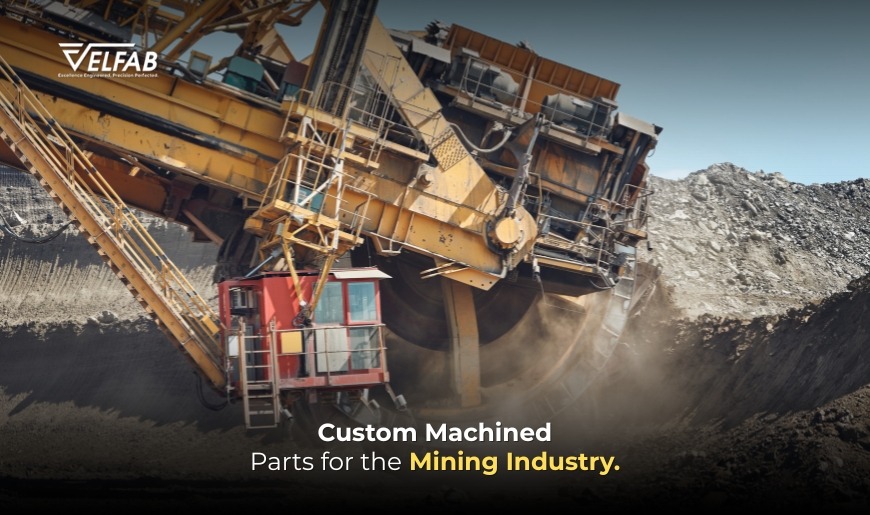
The mining industry operates in some of the harshest and most demanding environments. Equipment is exposed to dust, vibration, abrasive materials, continuous load cycles, and extreme weather conditions. To keep operations running safely and efficiently, mining companies rely on components built to withstand these stresses. Custom-machined parts are essential in mining equipment manufacturing because they deliver durable, accurate, and application-specific solutions for heavy-duty machinery.
Why Custom-Machined Parts Matter in the Mining Industry
Mining equipment such as crushers, conveyors, drill rigs, excavators, and screening systems operates under intense wear and mechanical strain. Standard components often fall short of the performance demands of different sites and ore conditions. Custom-machined parts ensure an exact fit, better material selection, and improved resistance to harsh environments, which is critical in mining equipment manufacturing.
Precision machining helps mining companies address key challenges such as:
• High mechanical stress
• Constant friction and vibration
• Exposure to dust, mud, corrosion, and heavy impact
• Site-specific performance requirements
• The need for long service life and predictable reliability
By producing components to precise specifications, custom machining significantly improves equipment longevity, uptime, and operational safety.
Key Challenges in Manufacturing Mining Equipment Components
Manufacturing parts for mining applications requires a deep understanding of heavy engineering, material behaviour, and operational conditions. These challenges play a major role in mining equipment manufacturing.
1. Severe Wear and Abrasion
Mining components endure continuous abrasion from rock, ore, and slurry. Parts such as liners, buckets, cutters, and shafts must maintain strength despite repeated wear. This demands hardened steels, wear-resistant alloys, and specialised coatings.
2. High Load Conditions
Machinery used for crushing, drilling, and hauling is subjected to extreme force and impact. Machined components require reinforced geometries and exact tolerances to prevent deformation or premature failure.
3. Complex Component Designs
Modern mining equipment relies on intricate assemblies. Multi-axis CNC machining is essential for producing detailed shapes and tight-fitting parts used across mining equipment manufacturing.
4. Corrosion and Environmental Exposure
Exposure to moisture, chemicals, mud, salt, and fluctuating temperatures accelerates corrosion. Using corrosion-resistant materials and protective surface treatments is necessary for maintaining component longevity.
5. Downtime Costs
Unplanned breakdowns can halt production and cause major financial loss. Custom-machined parts must be produced quickly and with precision to restore equipment efficiently.
How CNC Machining Supports Mining Equipment Performance
CNC machining has become fundamental to mining equipment manufacturing because it enables the production of strong, reliable, and highly precise components built for demanding mining conditions.
1. High Precision and Consistency
CNC machining ensures exact dimensional accuracy. Every component produced meets required specifications, reducing breakdowns and improving equipment stability.
2. Advanced Material Compatibility
CNC technology supports machining of hardened steel, stainless steel, high-strength alloys, bronze, and engineering plastics. These materials are crucial for mining equipment manufacturing.
3. Capability for Complex Geometries
Multi-axis CNC systems enable manufacturers to produce complex shapes for drill heads, pump housings, hydraulic components, gears, and couplings. These geometries support better performance and durability.
4. Enhanced Surface Preparation
Mining components often require treatments like nitriding, heat treatment, or hard-facing. CNC machining prepares surfaces with precision to ensure maximum treatment effectiveness.
5. Faster Production and Reduced Downtime
Automated machining significantly shortens lead times, allowing mining companies to replace worn components quickly and restore machinery with minimal disruption.
Benefits of Custom-Machined Parts for Mining Applications
• Higher durability in harsh environments
• Increased equipment uptime and fewer failures
• Improved operational safety
• Precision-fit components tailored to mining equipment manufacturing needs
• Lower long-term maintenance costs
• Reduced energy loss and smoother mechanical performance
Custom-machined components ultimately enhance plant efficiency and help mining operations maintain consistent productivity.
The Future of Machining in the Mining Sector
Mining companies are integrating automation, real-time monitoring, and advanced digital tools to improve performance. CNC machining, combined with innovative materials and simulation technologies, will continue to strengthen mining equipment manufacturing. As equipment becomes more advanced, the need for reliable, high-performance machined components will continue to increase.
Final thoughts
Custom-machined parts are essential for reliable and long-lasting mining equipment manufacturing. By addressing challenges such as abrasion, high loading, complex geometries, and environmental exposure, CNC machining ensures equipment operates at optimal efficiency. As the mining industry evolves, precision machining will remain a driving force for durability, safety, and operational success.